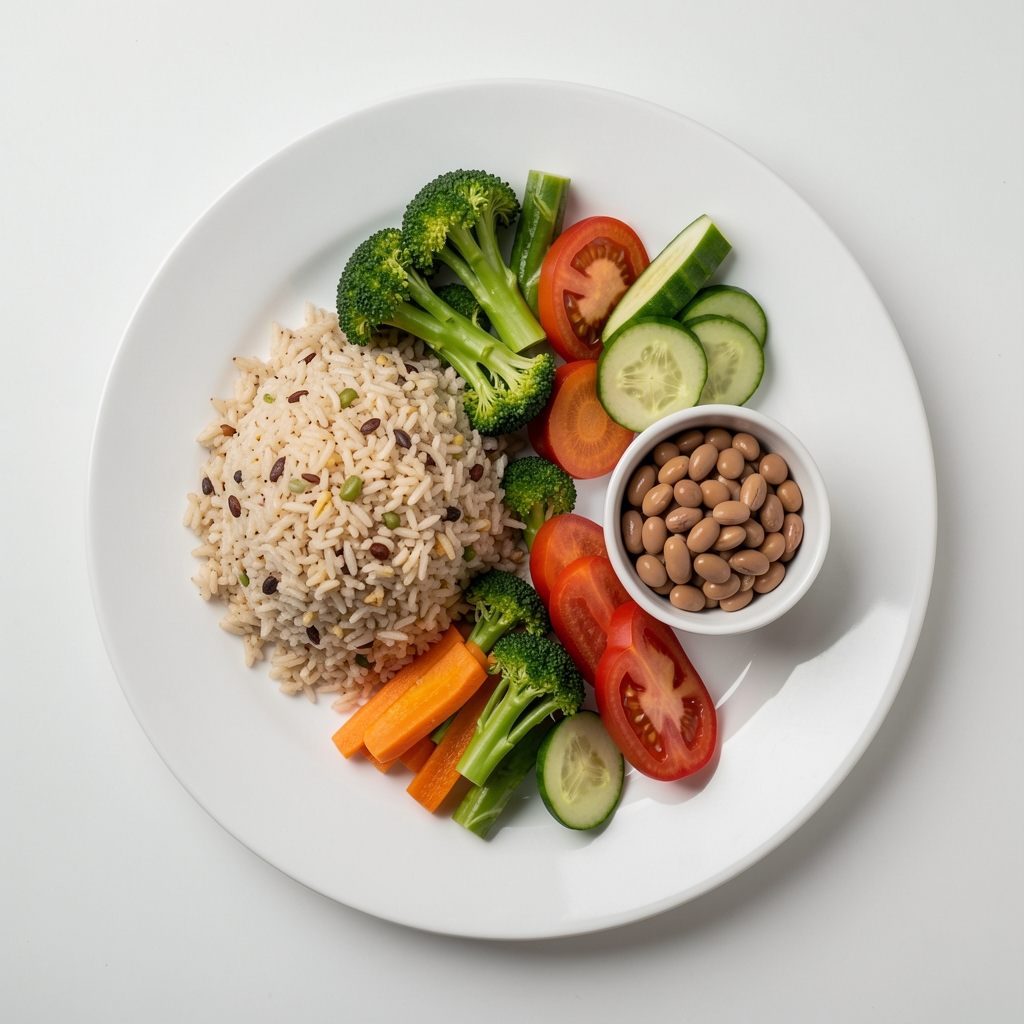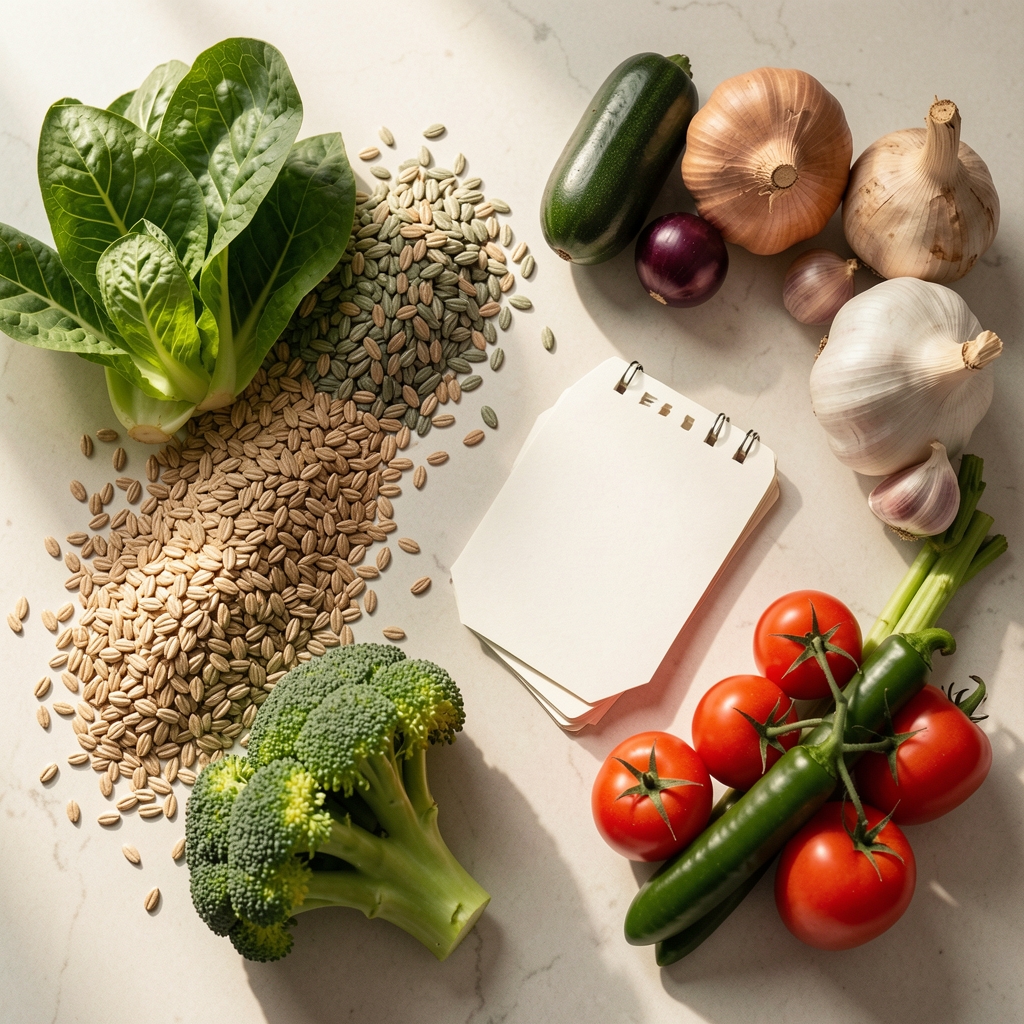
There is a particular quality of attention that forms at a market stall — a deliberate pause before the week's pattern of meals takes shape. Observations gathered over thirteen consecutive weekly visits to a London farmers' market point toward a consistent pattern: the vegetables chosen on a Saturday morning reliably determine the nutritional texture of the six days that follow.
The Market as a Structural Device
Most approaches to structured eating begin with a plan drafted at a desk — a list of ingredients, a grid of meals, a calculated sequence of preparation. The market visit inverts this sequence. Here, produce arrives first, and the week's nutritional architecture forms around what is available and in good condition. This inversion is not merely a logistical curiosity. Research published in nutrition behaviour journals has observed that shopping from physical availability, rather than from a fixed prior list, tends to increase the variety of vegetables consumed across a seven-day period.
Over the course of the documented quarter, an average of eight distinct vegetable varieties appeared in weekly selections when purchases were made at the farmers' market, compared with four to five when the same household sourced produce from a standard supermarket. The difference was not attributable to cost or convenience — both channels were equally accessible. The variable was the physical presentation of the food: arranged loose, handled directly, assessed by eye for ripeness and texture.
This matters for everyday nutrition because dietary variety, particularly across the vegetable and fruit groups, is one of the more consistently supported contributors to a balanced nutritional profile. Each variety brings a different concentration of micronutrients, a different fibre structure, and a different relationship to the gut's microbial population. The market, in this reading, is not a romantic preference but a structural tool for expanding the weekly nutritional range.
"The week's nutritional pattern is largely determined before the first meal is cooked — it is set at the point of selection."
Field note, Market visit 07 — January 2026
Seasonal Produce and the Logic of Portion Control
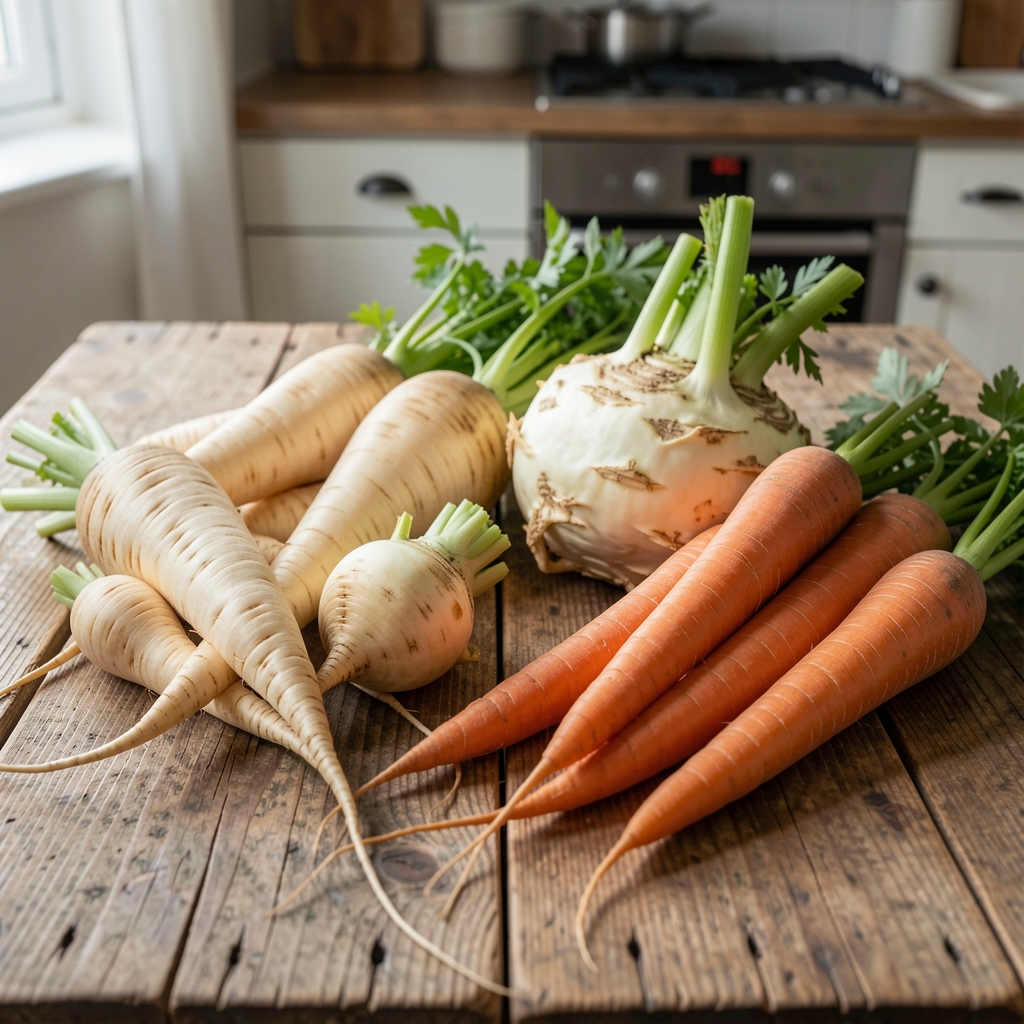
Seasonality introduces a natural constraint on selection. In the autumn and winter months documented during this exercise, root vegetables — parsnips, celeriac, swede, carrots — dominated available supply. These foods carry a particular relationship to portion size that is worth noting: they are dense, slow to prepare, and difficult to overconsume in a single sitting without a corresponding physical response. This is not a peculiarity of the individual foods, but a general characteristic of minimally processed, whole foods consumed in their natural form.
Nutritionist guidance on portion control consistently identifies processing level as a primary variable in how the body registers satiety. The more intact the food structure, the more time the digestive process requires, and the more reliably the body's internal signalling reflects actual intake. This is why the nutritional content of a roasted parsnip and a processed parsnip-based snack can be nominally similar while their effects on appetite and subsequent food intake differ substantially.
The seasonal market, by offering predominantly whole, unprocessed foods, effectively calibrates the household's relationship to portion size over the course of the autumn and winter quarter. This recalibration is gradual and often unnoticed — it registers not as a deliberate habit but as a quiet shift in how much food feels sufficient at a given meal.
Gut-Friendly Choices and the Weekly Rhythm
The relationship between seasonal whole foods and gut health has attracted sustained attention from researchers over the past decade. The emerging consensus, drawn from multiple independent longitudinal studies, holds that regular consumption of a wide variety of plant foods is among the most reliably supportive habits for maintaining a diverse gut microbial population. Diversity of gut flora, in turn, is associated in the research literature with a range of positive long-term outcomes across the digestive and broader physiological systems.
What the market observation adds to this picture is a practical note: the most effective route to dietary variety is not a calculated supplement to an otherwise narrow diet. It is the foundational structure of the weekly shop. When the household's primary vegetable source is a stall presenting fifteen to twenty distinct species across a given Saturday, the practical barrier to variety is removed. The household does not need to make a considered decision to introduce gut-friendly choices — the choice is embedded in the structure of the purchase.
This structural embedding is a recurring theme in the documented field notes. When healthy eating habits are regarded as deliberate individual decisions, they require ongoing effort and are susceptible to disruption under fatigue or time pressure. When they are embedded in the structural conditions of how food enters the household, they persist with considerably less friction. The weekly market visit, as a routine, functions as one such structural embedding.
Documenting the Quarter: What Changed and What Did Not
Over the thirteen-week documentation period, the household's consumption of fruits and vegetables increased from an estimated four and a half portions daily to an estimated six and a half — a shift of two portions, sustained across the full quarter without deliberate calorie tracking or nutritional calculation. The mechanism was not willpower or nutritional knowledge, both of which remained constant. The mechanism was the structure of the weekly shop.
What did not change, interestingly, was the total food budget. The cost per week for vegetables and fruits remained within three percent of its previous average. Seasonal produce at a farmers' market in central London, purchased directly from growers, is not systematically cheaper than supermarket equivalents — but neither is it substantially more expensive when bought in comparable quantities. The economic argument for seasonal whole foods is better framed as cost-neutral rather than premium.
The more significant shift was in the quality of the cooking that followed. When the primary ingredient in a given week is a root vegetable at peak ripeness — a celeriac with its papery outer skin still intact, a carrot pulled from the ground two days earlier — the preparation requires less augmentation. A roasted celeriac with a small quantity of good olive oil is a complete flavour. This simplicity, repeated across thirteen weeks, produced a measurable reduction in the volume of added oils, salt, and processed condiments used per week. The food, in its seasonal whole form, needed less done to it.
- 01 Weekly produce sourced from physical market displays tends to include a wider variety of vegetable species than list-based supermarket shopping.
- 02 Seasonal whole foods engage the body's satiety signalling more reliably than equivalent processed variants, supporting natural portion calibration.
- 03 A consistent weekly market routine functions as a structural embedding of dietary variety, reducing the reliance on deliberate decision-making.
- 04 A shift of two additional daily portions of fruits and vegetables was documented over thirteen weeks without deliberate caloric tracking.
- 05 The economic cost of sourcing from a farmers' market was found to be broadly cost-neutral relative to equivalent supermarket purchases.
Mindful Eating and the Attention of Selection
The phrase "mindful eating" has accumulated a degree of looseness in popular wellness discourse. In its most precise sense, it refers to a practice of sustained attentive engagement with food — with its appearance, texture, aroma, and taste — as a means of eating in closer accordance with the body's actual signals. The weekly market visit, as a physical practice, is one of the more natural entry points into this form of attention.
At a market stall, the selection process is necessarily attentive. The shopper handles the vegetables, assesses them for quality, makes comparative judgements across varieties. This brief period of careful attention — perhaps ten to fifteen minutes per visit — appears to carry its effects into the subsequent week of cooking and eating. Field notes recorded a consistent pattern: on weeks when the market visit was hurried or abbreviated, the cooking that followed was less considered, and the incidence of unconstructed, improvised meals was higher.
The connection here is not causal in any simple sense. But the market visit, as a dedicated and unhurried practice, sets an attentive register for the week that follows. It is a small act of considered selection that initiates a sequence of considered preparation. This is perhaps the least quantifiable observation in the documentation — and, in the writer's estimation, among the most practically significant.
Articles published on Dranvelo Letters are editorial in nature and reflect the writers' observations on everyday wellness practices. The content is not intended as professional advice, nor as guidance for the management of any specific condition. Readers with specific concerns about their daily routines are encouraged to speak with a qualified wellness professional.